
A new online store can look polished and still fail at the point that matters most: turning a ready-to-buy visitor into a customer. The right ecommerce website developer UK businesses choose will look beyond a homepage mockup and build for speed, trust, search visibility, secure payments, and the daily reality of running a store.
For a startup, retailer, or established service business adding products online, the decision is not simply about finding someone who can install a theme. It is about choosing a delivery partner that can translate commercial goals into an ecommerce platform that customers find easy to use and your team can manage with confidence.
What an Ecommerce Website Developer UK Should Deliver
An ecommerce website is a sales operation, not a digital brochure. Every part of it affects revenue: product discovery, page load time, checkout friction, stock accuracy, payment choices, and the reassurance customers need before sharing card details.
A capable developer starts by understanding how the business sells. A boutique retailer with 30 products has different requirements from a wholesaler managing thousands of SKUs, trade pricing, and repeat orders. Likewise, a business selling appointments, subscriptions, downloadable products, or personalized items needs different workflows from a standard catalog.
The development process should turn those requirements into a clear store structure. That includes logical categories, product filters, persuasive product pages, cart and checkout journeys, delivery settings, tax configuration, and a content structure that supports ongoing SEO. Good design guides decisions. Good development makes those decisions reliable behind the scenes.
A Store Built for Mobile Buying
Most customers will first encounter your business on a phone. They may be comparing prices on a commute, checking availability in a store, or buying after seeing a social media post. If product images are slow, filters are awkward, or checkout requires excessive typing, they leave.
Mobile responsiveness must be designed into the experience from the start, not treated as a final adjustment. Buttons need to be easy to tap, navigation must remain clear on smaller screens, and key information such as delivery times, returns, and payment options should be easy to find. A fast mobile store also supports visibility, because search engines favor pages that provide a better user experience.
Secure Payments and Customer Confidence
Trust is a conversion feature. Shoppers need confidence that payments are protected, the business is legitimate, and help is available if something goes wrong. Your developer should implement trusted payment gateways, SSL security, clear policy pages, and a checkout that does not send customers through unnecessary steps.
Security is also an ongoing responsibility. Software updates, backups, malware protection, user access controls, and secure hosting all matter after launch. The cheapest build can become expensive if it is left without maintenance or hosted on infrastructure that cannot support the store during busy periods.
Choosing a Platform That Fits the Business
There is no single best ecommerce platform for every UK business. The best choice depends on the product range, desired flexibility, budget, internal skills, integration needs, and plans for growth.
A simple hosted platform can be a strong choice for a smaller business that needs a reliable store live quickly, with less technical administration. An open-source or more configurable platform may suit a business that needs tailored checkout flows, complex product rules, or deeper control over content and functionality. For high-volume retailers, a custom implementation may be justified when it connects critical systems and automates time-consuming work.
The question is not whether a platform has every possible feature. It is whether it supports the features your business actually needs without creating unnecessary cost and complexity. A good developer will explain the trade-offs in plain language before recommending a route.
For example, a growing retailer may need inventory synchronization with a POS system, while a B2B supplier may need customer-specific pricing, credit accounts, and role-based access. A brand selling across borders may prioritize multi-currency payments, localized shipping rules, and tax settings. These requirements affect platform selection, architecture, and budget long before design begins.
The Features That Affect Revenue After Launch
A launch date is a milestone, not the finish line. Stores improve when real customer behavior informs the next round of decisions. That is why analytics, conversion tracking, and a practical support plan should be part of the conversation from the beginning.
Your ecommerce build should make it easy to monitor which products attract attention, where visitors leave the funnel, how campaigns perform, and whether mobile customers convert differently from desktop users. With useful data in place, improvements become more informed. You can test product copy, improve category navigation, refine shipping messages, or prioritize the pages that have the greatest sales potential.
Several features are especially valuable when they match the business model:
- Abandoned-cart recovery for bringing back shoppers who left before payment.
- Product reviews and social proof to reduce purchase hesitation.
- Search and filtering tools for larger or more technical catalogs.
- Email marketing connections for repeat purchases and customer retention.
- ERP, CRM, or POS integrations to reduce manual admin and inventory errors.
- Cloud hosting and CDN configuration to maintain speed during high traffic.
Not every store needs all of these on day one. A sensible development plan separates essential launch features from later enhancements, protecting the initial budget while leaving room to scale without rebuilding everything.
Questions to Ask Before You Hire
A developer’s portfolio can show visual quality, but it does not tell you how they handle scope, security, support, or growth. Ask how they define project requirements, what is included in the quoted price, who owns the website and its content, and what happens after launch.
It is also worth asking how they approach site speed, technical SEO, accessibility, backups, and payment gateway setup. These may not be the most glamorous subjects, but they determine whether the store performs well under pressure and remains easy for customers to use.
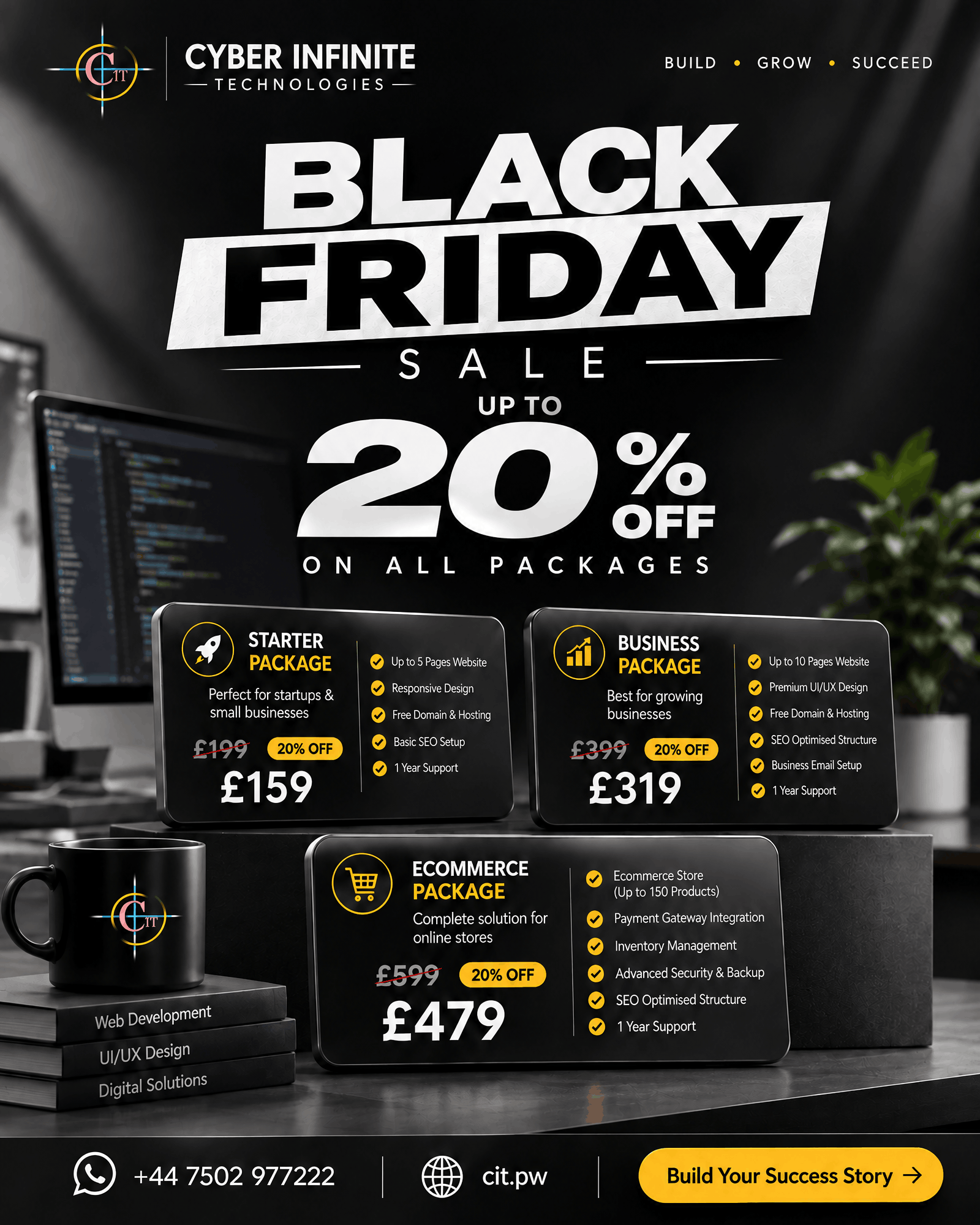
Clear package inclusions are particularly helpful for small and medium-sized businesses. When design, development, domain setup, hosting, mobile optimization, security, and foundational SEO are managed together, there are fewer gaps between suppliers and fewer surprises in the delivery process. You should know exactly what is included, what is optional, and what ongoing support costs before work starts.
Communication matters just as much. The right team will ask focused questions about your customers, margins, operations, and sales goals. They will also be honest when a requested feature adds complexity without enough commercial return. A dependable partner does not promise every idea immediately. They help you invest in the work most likely to move the business forward.
Why Ongoing Support Is Part of the Build
Ecommerce changes constantly. Product lines evolve, promotions need to go live, payment providers update requirements, and security patches cannot wait for an annual redesign. A store without support can quickly become slow, vulnerable, or difficult to manage.
Look for a developer that offers a practical long-term service: monitored hosting, regular updates, backups, technical fixes, performance checks, and help when your team needs to add functionality. For businesses investing in SEO and paid campaigns, this is even more important. Sending campaign traffic to a slow or unstable store wastes budget and weakens customer trust.
Cyber Infinite Technologies approaches ecommerce as part of a connected digital growth program, bringing design, development, secure hosting, SEO foundations, and ongoing support into one accountable service. That approach is valuable when you want a partner that understands both the storefront and the systems that keep it performing.
The best ecommerce website is not the one with the longest feature list. It is the one that makes buying easy, represents your business with confidence, and gives you a stable platform for the next stage of growth. Choose a developer that asks the right commercial questions, builds with care, and remains available after the first order comes through.